
Of Faith and Feasting: The True Story of the First Thanksgiving
From Perilous Voyage to Thankful Spread — A Celebration of Courage, Gratitude, and God’s Providence
November 26, 2025 | 7-minute read
Every November, we celebrate Thanksgiving with gratitude and feasting, but few pause to consider how it all began.
The real story of Thanksgiving isn’t just about turkey and trimmings. It’s about a small band of Believers seeking freedom, a grueling voyage across an unforgiving sea, a winter of heartbreak, and a summer of hope.
It’s the story of faith tried by fire — and a feast born from endurance, friendship, and the grace of God.
This post retells that remarkable journey — from oppression and ocean storms to harvest and harmony — and concludes with a curated list of books that preserve the true legacy of Thanksgiving for every age.
Part I: From Persecution to Pilgrimage
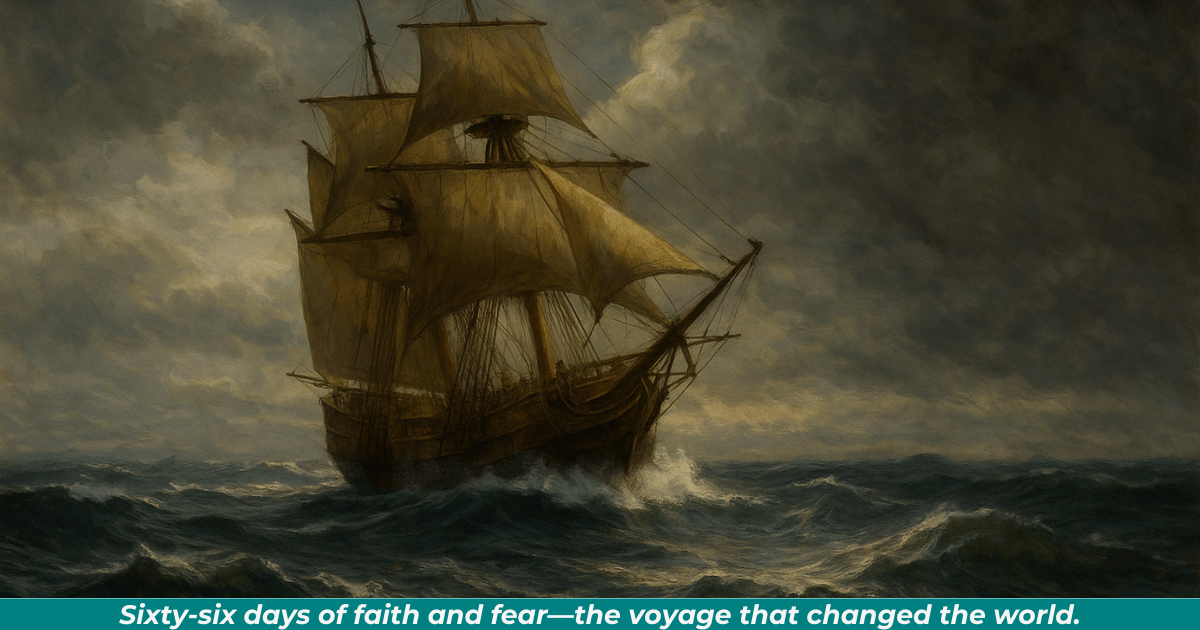
England in the early 1600s was not a safe place for religious dissenters.
King James I demanded unity under the Church of England, and those who wished to worship freely — the Separatists — were persecuted, imprisoned, and driven into hiding.
Seeking refuge, a small group fled to Netherlands, where they lived for over a decade.
Yet freedom came with challenges: language barriers, economic hardship, and fear that their children were losing their English identity.
So, in 1620, they made a fateful decision — to sail for the New World.
The ship that carried them, the Mayflower, was barely 100 feet long and not meant for passengers.
Yet 102 men, women, and children boarded, trusting that God would bring them safely to a land where they could worship freely.
After sixty-six grueling days at sea — battered by storms, malnourished, and cramped — they spotted land: Cape Cod, Massachusetts.
It wasn’t their intended destination, but it was where Providence had led them.
They drafted the Mayflower Compact, a covenant to govern themselves under God — the first document of self-government in the New World.
Part II: Winter of Trial, Summer of Hope
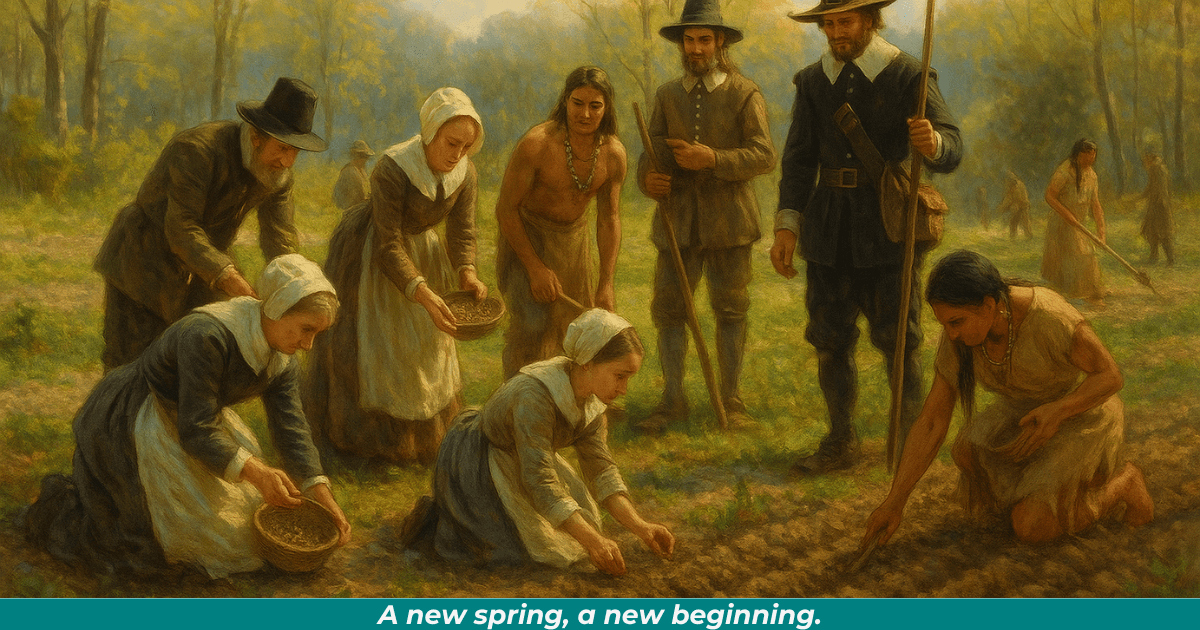
When the Pilgrims landed at Plymouth Rock in December 1620, they found a harsh, unfamiliar wilderness.
The bitter winter was deadly. Scurvy, malnutrition, and exposure claimed nearly half of their number.
By spring, only 53 remained.
Yet amid their grief, hope stirred.
God’s providence appeared in the form of Squanto, a Patuxet [“puh-TUK-set”] native who had been captured, sold into slavery, and miraculously returned home years earlier.
Having learned English, he became the Pilgrims’ interpreter and guide, teaching them how to fish, plant corn, and survive.
That spring and summer, the settlers and Wampanoag [“wawm-puh-NO-ug”] tribe forged a friendship under the leadership of Chief Massasoit [“mah-suh-soyt”].
Together, they worked the land, traded, and prepared for harvest.
By autumn, their crops flourished.
The Pilgrims saw the abundance not as luck but as divine blessing — a reason to gather and give thanks.
Part III: The First Thanksgiving Feast
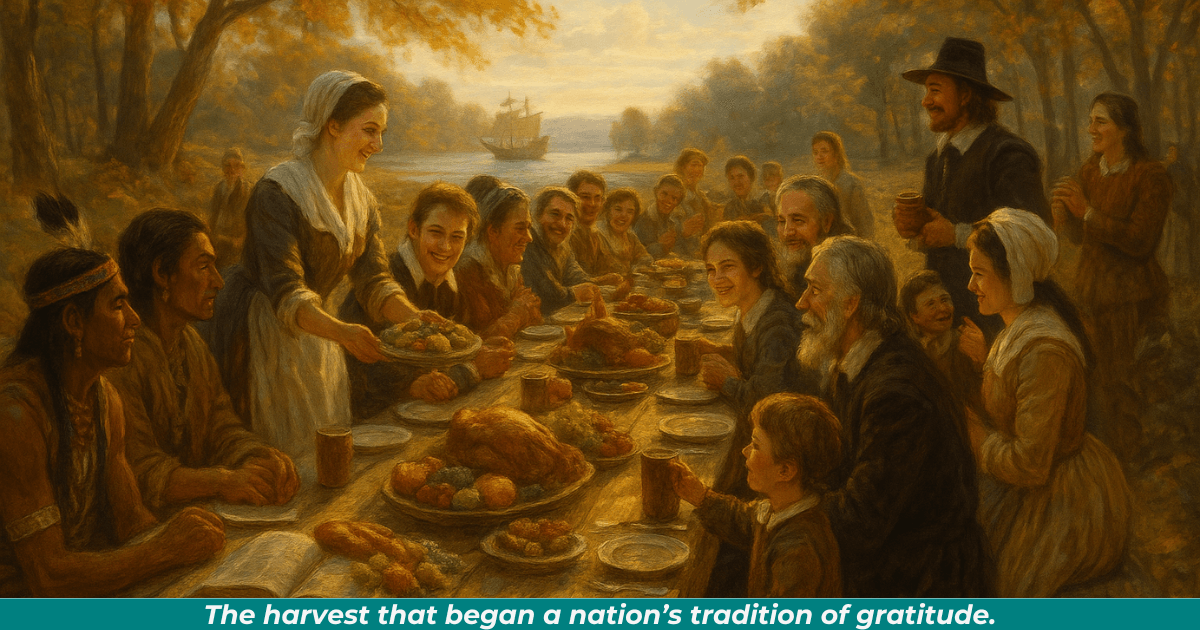
The feast lasted three days.
Venison, fowl, corn, squash, fruits, and nuts filled the tables. Pilgrims and natives played games, sang hymns, and celebrated survival and abundance.
Though later presidents like Washington and Lincoln would formalize Thanksgiving as a national holiday, its roots go back to that humble gathering in 1621 — a moment of gratitude after unthinkable loss, a shared recognition of grace.
To the Pilgrims, Thanksgiving was never about material wealth or ease; it was about spiritual endurance, divine mercy, and community — lessons we still need today.
Books (and Resources) That Honor the True Thanksgiving
For Adults & Older Readers
It’s never too late to learn about our national history and traditions.
If you’d like to start your education, try one (or all) of the following recommendations.
The First Thanksgiving: What the Real Story Tells Us about Loving God and Learning from History by Robert Tracy McKenzie — A thoughtful Christian historian explores what the Pilgrims’ story can still teach modern Believers about gratitude and grace.
Thanksgiving in America (tract) by David Barton, WallBuilders.com — A concise yet powerful look at the Biblical roots of the holiday and America’s faith-filled beginnings.
For Children & Families
Getting started learning the truth about our country can never begin too early, and sometimes it’s better to learn as a family than individually.
So, if you’d like your little one to learn their history or if you’d like your family to have a better understanding of our nation’s beginnings before you gather around the table, why not try these stories geared for the younger ages?
The First Thanksgiving by Jean Craighead George — A gentle, well-researched picture-book that captures the Pilgrims’ journey and the first feast.
The Pilgrims’ First Thanksgiving by Ann McGovern — A classroom favorite introducing young readers to the challenges and triumphs of the early settlers.
If I Were a Pilgrim: Our First Thanksgiving by The Mayflower Society — A charming way for children to imagine life aboard the Mayflower and in Plymouth.
Sometimes all it takes for us to be grateful for where we are and what we have today is to learn where we came from and the hardships endured to give us the privileges we enjoy.
Reflections of Gratitude
Thanksgiving is not about excess but about remembrance — of courage, faith, and perseverance.
The Pilgrims endured religious persecution, storms, starvation, and sorrow to build a place where faith could flourish freely.
Their gratitude wasn’t rooted in comfort but in conviction — a reminder that thankfulness isn’t found in what we possess, but in Whom we trust.
Next time: We turn the page to December and explore Spiritual Literacy Month — discovering how words can uplift, heal, and illuminate our faith as the year draws to a close.
Before you sit down to your own Thanksgiving meal this year, pause to thank God for the freedoms you enjoy, for the books that teach and inspire you, and for the stories that remind us where we come from.
Share this post with a friend or read one of the books above with your family — and keep the true meaning of Thanksgiving alive.
And, as always, let me know how you chose to celebrate this day of thanks in the comments below.
Related Topics: Pilgrims & the Mayflower, The Mayflower Compact, Plymouth colony (1620–1621), Wampanoag & Massasoit, Squanto (Tisquantum), first Thanksgiving (1621), religious liberty in early America, Colonial harvest traditions, faith, providence, & gratitude, primary sources on Thanksgiving, family read-alouds for Thanksgiving, children’s Thanksgiving books, Christian reflections on thankfulness, myths vs. facts about Thanksgiving
* NOTE: If you’d like to read my fictitious version of Thanksgiving, I created a short story to celebrate the holiday. Join my email list or check my website for more information on when my short stories can be purchased.
I’m not compensated by any person, platform, or organization mentioned in this post. I include them solely for your benefit and edification.
All images courtesy of ChatGPT.

Alicia Strickland
Hi! I write across multiple genres under various pen names. But for nonfiction, I write as myself.
As a designer with a love of Old Hollywood and all things creative, I bring diverse perspectives to my storytelling... and to my blog.
In the unlikely event that I’m not writing, I enjoy crafting, gardening, or spending time with my flame-point Siamese, Hunter.
Want to stay updated? Sign up for my newsletter (below 👇) to receive exclusive content and be the first to hear about new releases!
YOU MIGHT LIKE

Jan 08, 2025
Jan 08, 2025
POPULAR POSTS
By Alicia Strickland on February 14, 2025

By Alicia Strickland
Jan. 05, 2025
REVIEWS

Jan 15, 2025
Dec 29, 2024
Jan 20, 2025
Feb 14, 2025

Crafting passionate tales for adult hearts and creating magical worlds for young minds!
Stay in touch!
Click “subscribe” to get weekly newsletter updates on all BBA news and books.
©️ 2026 booksbyalicia.com