
The Many Lives of Words: Playful, Poetic, Personal, and Preserved
A January Celebration of Language, Imagination, Handwriting, Beloved Characters, and the Shelves That Hold Our Stories
January 21, 2026 | 9-minute read
Words don’t live just one life.
They play.
They comfort.
They haunt.
They shape who we are — and where our stories end up living once we let them go.
January offers a cluster of literary observances that, taken together, remind us how flexible and enduring words really are. From expanding vocabulary and beloved characters to handwriting, classic authors, and the shelves that keep stories within reach, this week invites us to notice language in all its forms.
National Thesaurus Day (January 18)
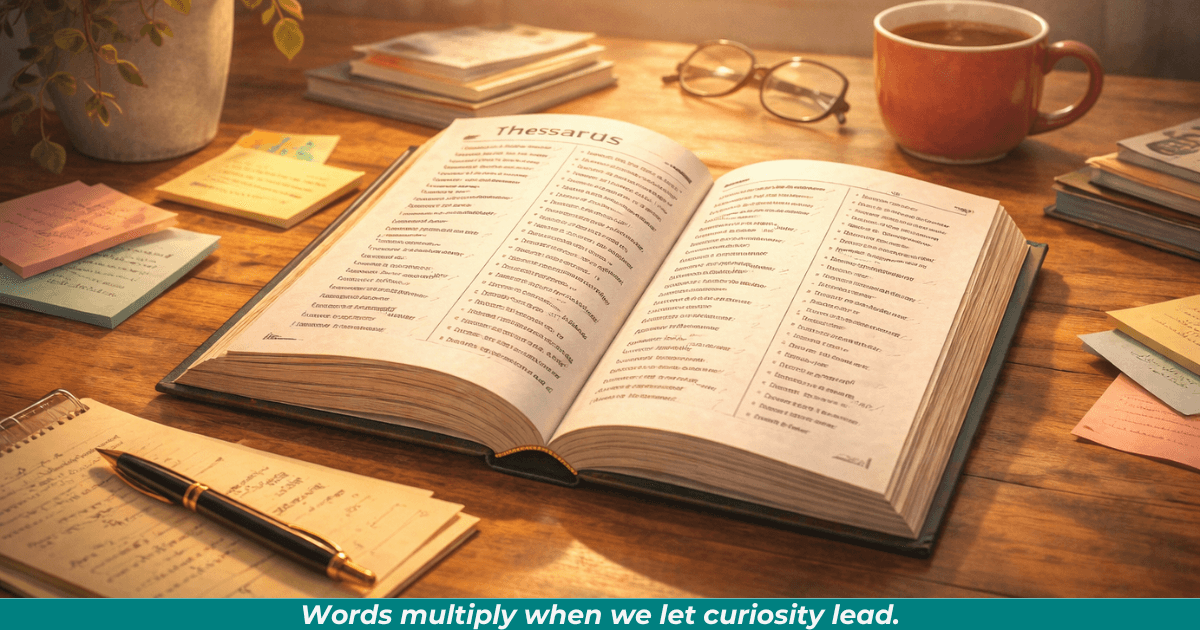
I love a good thesaurus.
Truly. It’s one of a writer’s best friends. I use mine constantly — not to sound smarter, but to sound better. Clearer. More precise. More me.
A thesaurus isn’t about reaching for the fanciest word you can find. In fact, that’s the only real danger: choosing a word so far outside your usual vocabulary that it sticks out like a sore thumb. If the rest of your writing lives comfortably in five-cent words and suddenly a ten-cent one shows up uninvited, the rhythm breaks.
But used well, a thesaurus does something wonderful: it expands your vocabulary. When you learn that X is another way of saying A, you haven’t just solved a sentence — you’ve added a new tool to your writer’s toolbox.
A thoughtful way to celebrate
Instead of overhauling your prose:
Look up one word you overuse
Explore alternatives and notice their subtle differences
Choose the one that best fits your voice
Let the rest go
A thesaurus isn’t about replacement — it’s about discovery.
Winnie-the-Pooh Day (January 18)
I’ll admit it: I was never a Pooh kid.
I didn’t read the books. I didn’t watch the cartoons. He just… never called to me. I couldn’t tell you why. As a child, I gravitated toward Care Bears, Strawberry Shortcake, and other brightly colored worlds — Pooh simply didn’t make the cut.
And yet.
I understand why he’s endured. A.A. Milne created something gentle and comforting, a world where kindness mattered, where simple wisdom lingered, and where children found safety in familiarity. Pooh has been loved for generations not because he dazzles, but because he reassures.
Even if he wasn’t my cup of tea, I’d much rather see children embrace Pooh or Beatrix Potter than some of the louder, agenda-heavy content aimed at kids today.
A gentle way to observe
You don’t have to be a lifelong fan:
Revisit a Pooh quote or illustration
Read a short passage aloud to a child
Appreciate the staying power of simple storytelling
Some stories endure not because they change us — but because they steady us.
Edgar Allan Poe’s Birthday (January 19)
Poe and I go back to my preteen years.
While I was reading Fear Street and watching Are You Afraid of the Dark?, I was also devouring Poe.
The Tell-Tale Heart. The Cask of Amontillado. The Pit and the Pendulum. The Murders in the Rue Morgue.
I loved the suspense — dark without being gratuitous, eerie without being grotesque.
I don’t know much about Poe’s personal life beyond knowing it was marked by tragedy.
What I do know is that his stories still creep under the skin in the best way. They linger. They unsettle. They remind us that words can whisper just as powerfully as they shout.
Marking the moment
You don’t need a gothic bent to appreciate him:
Revisit a short story or poem
Notice how mood and tension are built
Appreciate how restraint can heighten fear
Poe reminds us that atmosphere is a language all its own.
National Handwriting Day (January 23)
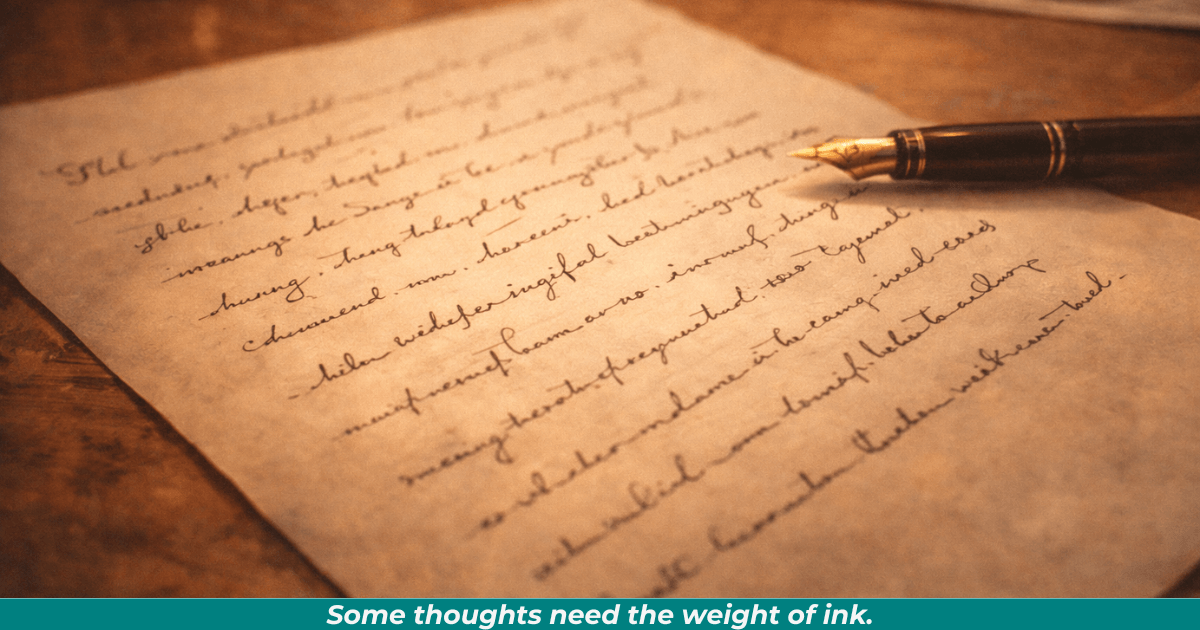
Handwriting is personal.
It’s muscle memory. Identity. Rhythm. The way your thoughts slow down just enough to take shape. When you write by hand, your brain works differently — more deliberately, more consciously.
I’ve noticed how much my handwriting has changed since I stopped writing letters and essays by hand. It’s sloppier now. Less intentional. Once upon a time, my script was neat, classic — even praised. These days, typing has taken over, and something tactile has been lost.
Handwriting connects us to ourselves in a way screens simply can’t.
A quiet nod to the day
No grand gestures needed:
Write a paragraph or list by hand
Sign your name slowly, intentionally
Notice how it feels to form letters again
Handwriting reminds us that thinking has a physical rhythm.
Library Shelfie Day (January 22)

Libraries — public or personal — are where stories wait patiently.
I love visiting my local library. I also love my home library. One day, I hope to have an entire room devoted to books. For now, they live everywhere: shelves in nearly every room, even the bedroom.
Library Shelfie Day invites us to celebrate these spaces. The idea is simple: take a photo of yourself beside a shelf of books. Whether that shelf lives in a library or your own home doesn’t matter.
(And if you’re not a big selfie taker, photographing the books themselves works just as well.)
Join in your own way
Library Shelfie Day isn’t about performance or perfection. It’s simply an invitation to notice the spaces where books live — and the role they play in your daily life. Whether that space is public or private, polished or a little chaotic, it still tells a story.
Visit your local library
Tidy a favorite shelf at home
Photograph the books you return to again and again
Books don’t just tell stories — they build homes.
Next time: Next week, we’ll take a look ahead — this time into February’s literary observances — exploring celebrations of libraries, storytelling, children’s books, and reading aloud.
It’s a chance to move into the new month with ideas already in hand, so you can choose what speaks to you before the calendar rushes ahead.
Choose One Way to Notice Words
You don’t need to do everything.
If one of these observances caught your attention, choose just one to engage with — whether it’s exploring new words, revisiting a childhood favorite, writing by hand, or spending time among shelves you love.
And if you do, I’d love to hear about it.
Tell me in the comments which one you chose — and how it felt.
Related Topics: Vocabulary building • Classic children’s literature • Gothic fiction • Handwriting and identity • Libraries and reading spaces
All images courtesy of ChatGPT.

Alicia Strickland
Hi! I write across multiple genres under various pen names. But for nonfiction, I write as myself.
As a designer with a love of Old Hollywood and all things creative, I bring diverse perspectives to my storytelling... and to my blog.
In the unlikely event that I’m not writing, I enjoy crafting, gardening, or spending time with my flame-point Siamese, Hunter.
Want to stay updated? Sign up for my newsletter (below 👇) to receive exclusive content and be the first to hear about new releases!
YOU MIGHT LIKE

Jan 08, 2025
Jan 08, 2025
POPULAR POSTS
By Alicia Strickland on February 14, 2025

By Alicia Strickland
Jan. 05, 2025
REVIEWS

Jan 15, 2025
Dec 29, 2024
Jan 20, 2025
Feb 14, 2025

Crafting passionate tales for adult hearts and creating magical worlds for young minds!
Stay in touch!
Click “subscribe” to get weekly newsletter updates on all BBA news and books.
©️ 2026 booksbyalicia.com